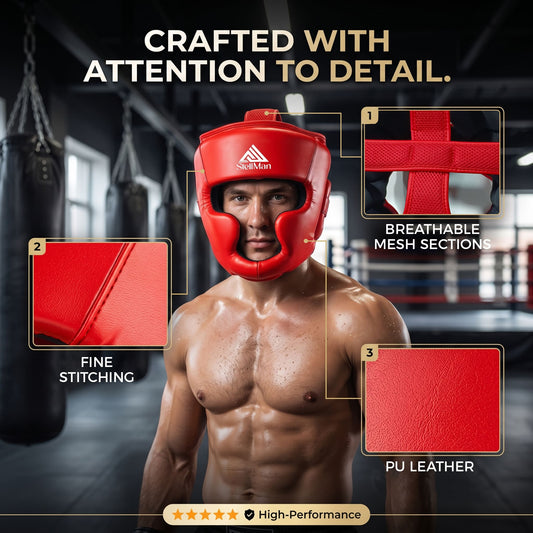
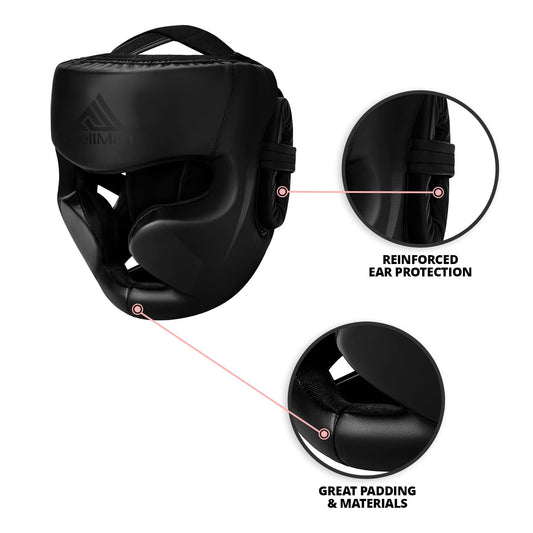
Karate Headgear & Helmets for Training and Sparring
The right karate headgear should provide comfortable coverage without distracting you from movement, technique, or your training partner. StellMan karate headgear and helmets are designed for martial artists who want a practical combination of coverage, fit, visibility, and comfort during karate training and sparring.
Whether you're learning the fundamentals at your local dojo, practicing controlled kumite, or upgrading your martial arts equipment, choosing headgear that fits properly and matches your training requirements is an important part of building your karate gear setup.
Choose the Right Karate Headgear for Your Training
Karate training can involve different levels of contact and different equipment requirements. Your choice of headgear should therefore depend on how you train, the amount of coverage you prefer, and the rules of your dojo or competition organization.
StellMan's karate headgear collection includes options designed for karate sparring, martial arts training, and protective head coverage.
When comparing karate helmets, consider:
- Head and ear coverage
- Open-face or additional facial coverage
- Visibility during movement
- Padding and overall construction
- Adjustability and fit
- Ventilation and interior comfort
- Intended training or sparring use
- Requirements of your dojo or competition organization
A properly fitted helmet should remain securely positioned while allowing you to move naturally.
Why Wear Karate Headgear During Sparring?
Sparring involves controlled contact between training partners, making appropriate protective equipment an important part of many karate training environments.
Karate headgear can provide padded coverage around areas of the head depending on its design. Different models may offer different levels of coverage, so the best option depends on your training style and your instructor's requirements.
Headgear should be considered part of a complete protective setup rather than a substitute for controlled training, proper technique, qualified coaching, or other required protective equipment.
For competition, always check the current equipment requirements of the specific organization or tournament. Rules can differ between federations and events.
Karate Headgear vs. Karate Helmet: What's the Difference?
The terms karate headgear and karate helmet are often used interchangeably when shopping for martial arts protective equipment.
In practice, both terms can refer to padded head protection designed for karate or other combat-sports training. The important difference is usually the design and coverage of the specific product rather than the name used to describe it.
Some karate headgear uses an open-face construction for greater visibility, while other designs may incorporate additional facial or cheek coverage.
When choosing between models, focus on the actual construction, fit, coverage, and intended use rather than the word "helmet" or "headgear" alone.
Open-Face Karate Headgear
Open-face karate headgear is designed to provide padded head coverage while leaving more of the face exposed.
This style can be useful for athletes who prioritize:
- A wider field of vision
- Easy movement
- A less enclosed feel
- Clear awareness of a training partner
- Lightweight training equipment
Open-face designs are commonly used for martial arts training where visibility and movement are important.
Karate Headgear with Additional Face Coverage
Some martial arts helmets include additional facial coverage, such as a face shield or protective bar.
This type of design can provide more coverage around the front of the face, but it may feel different from an open-face model.
Before purchasing, check whether your dojo or competition organization allows the specific type of face protection you are considering. Equipment requirements can vary by organization and age division.
Fit Matters When Choosing a Karate Helmet
A karate helmet should fit securely without creating excessive pressure.
A loose helmet can shift during movement, while an overly tight helmet can become uncomfortable during longer training sessions. Adjustable straps or hook-and-loop closures can help fine-tune the fit.
Before ordering, check the product's size chart and follow the manufacturer's measurement instructions.
For younger karate practitioners, choosing equipment designed for their head size is especially important. Do not assume that an adult headgear model will provide an appropriate fit simply because it can be adjusted.
Comfort and Ventilation for Long Training Sessions
Karate training can involve repeated drills, conditioning, technique practice, and sparring rounds. Headgear that feels unnecessarily heavy or restrictive can become distracting.
Look for features such as:
- Lightweight construction
- Breathable interior materials
- Ventilation openings
- Secure but adjustable closures
- Smooth interior surfaces
- Appropriate padding
- A well-balanced design
These features can contribute to a more comfortable training experience while allowing you to concentrate on your technique.
Karate Head Protection for Different Training Levels
Beginners
For beginners, comfort and proper fit should be priorities. New karate practitioners are still learning stance, footwork, defensive movement, and controlled contact, so equipment should support training without becoming a distraction.
Intermediate Practitioners
As training becomes more demanding, athletes may want headgear that balances coverage, visibility, ventilation, and secure adjustment during repeated sparring sessions.
Experienced Karate Practitioners
Experienced karateka may have specific preferences based on their discipline, sparring style, competition rules, and previous equipment experience. At this level, details such as coverage, weight, fit, and visibility can become especially important.
Karate Headgear for Kids and Teens
Young martial artists may have different equipment requirements from adults.
Before purchasing kids' karate headgear, check the manufacturer's size recommendations and your instructor's requirements. Some competition organizations also have additional protective-equipment requirements for younger competitors.
For example, NASKA's current rules require headgear covering the front, sides, and back of the head with a soft padded surface, while also requiring face shields for competitors aged 17 and under. Requirements like these demonstrate why competition equipment should always be checked against the rules of the specific organization.
Karate Headgear for Competition
Do not assume that every karate helmet sold online is automatically approved for competition.
Different organizations can have different requirements concerning headgear construction, coverage, face shields, padding, and other protective equipment.
If you compete in the United States, check the current rules of your specific federation, tournament organizer, and division before purchasing equipment for competition.
For example, USA Sport Karate's published fighting rules specify particular safety equipment and face-shield requirements based on age and division.
This is particularly important when choosing between an open-face karate helmet and a design with additional facial coverage.
How to Care for Karate Headgear
Proper care can help keep martial arts headgear clean and ready for regular training.
After each session:
- Wipe the exterior and interior surfaces according to the manufacturer's care instructions.
- Allow the headgear to dry completely before storing it.
- Avoid leaving damp equipment inside a closed gym bag.
- Check straps, stitching, padding, and closures regularly.
- Replace equipment if it becomes damaged or no longer maintains a secure fit.
Avoid using harsh chemicals unless they are specifically recommended for the materials used in your headgear.
Build Your Complete Karate Gear Setup
Karate headgear is only one part of a complete martial arts training setup.
Depending on your discipline and training environment, your equipment may also include:
- Karate gi
- Karate belt
- Mouthguard
- Hand protection
- Foot protection
- Shin guards
- Chest protection
- Groin protection where appropriate
- Training apparel
Your instructor or competition organization can tell you which protective equipment is required for your particular style and level of training.
Shop Karate Headgear at StellMan
StellMan's karate headgear and helmets are designed for martial artists looking for practical head coverage during training and sparring.
Explore the collection to compare available designs and choose the headgear that best matches your preferred coverage, fit, visibility, and training requirements.
Whether you're starting karate, attending regular dojo sessions, or preparing for controlled sparring, choose equipment that fits correctly and follows the requirements of your training environment.
Frequently Asked Questions
What is karate headgear?
Karate headgear is padded protective equipment worn during certain types of martial arts training and sparring. Depending on its design, it can provide coverage around areas such as the forehead, sides, rear of the head, ears, cheeks, or face.
Is karate headgear the same as a karate helmet?
The terms are often used interchangeably. The actual protection and wearing experience depend on the individual product's construction, padding, coverage, and fit.
What should I look for in karate headgear?
Consider coverage, fit, visibility, padding, weight, ventilation, adjustability, durability, and whether the equipment meets the requirements of your dojo or competition organization.
Does karate headgear prevent concussions?
Headgear should not be marketed as a guarantee against concussion or other brain injuries. It provides physical coverage and padding, but it does not eliminate the risks associated with contact sports. Proper coaching, controlled sparring, technique, and appropriate equipment remain important.
Should karate headgear cover the ears?
Some karate headgear designs include ear protection, while others offer different coverage. If ear coverage is important for your training, check the product specifications before ordering.
Is a face shield required for karate?
Requirements vary by organization, age group, and competition division. Some organizations require face shields for certain younger competitors, while other divisions may have different requirements. Always check the current rules for your event.
Can beginners wear karate headgear?
Yes, when headgear is appropriate for the training activity and permitted by the instructor. Beginners should prioritize proper fit, comfort, visibility, and equipment appropriate for their training level.
How should a karate helmet fit?
A karate helmet should sit securely without excessive movement or uncomfortable pressure. Use the manufacturer's measurement and sizing instructions before selecting your size.
Can karate headgear be used for other martial arts?
Some headgear can be suitable for multiple martial arts, but this depends on its construction and intended use. Check the manufacturer's specifications and your training facility's equipment requirements before using it for another discipline.
Is all karate headgear approved for tournaments?
No. Tournament equipment requirements vary. Never assume that a product is competition-approved without verifying the current rules of the relevant federation or tournament organizer.
How do I clean karate headgear?
Follow the manufacturer's care instructions. In general, wipe the surfaces with an appropriate mild cleaner, allow the equipment to dry completely, and avoid storing it while damp.